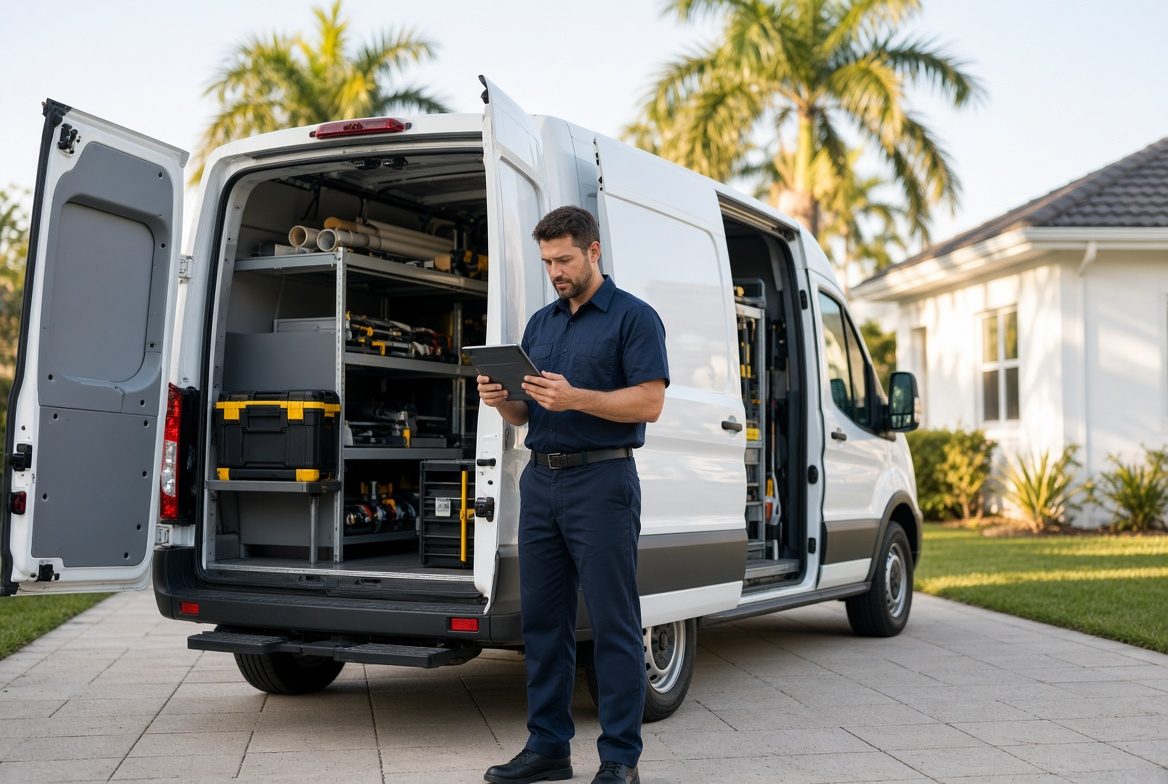
Better Intake Stops Wasted Truck Rolls
A truck roll that cannot finish the job is one of the most expensive hours on your calendar. The customer waited. The crew burned fuel and time. The next stop ran late. And you still have to come back.
Most of those wasted trips start before anyone leaves the shop. The intake was thin. Someone booked "AC not cooling" or "drain backup" with almost no detail. The wrong tech showed up, or the right tech showed up without the part that would have closed it.
What a wasted truck roll actually costs
Count the obvious pieces first. Drive time, labor, and fuel are real. So is the slot you cannot sell to someone else that morning.
Then count the quieter costs. The homeowner loses confidence. Your office spends the afternoon rescheduling. The original job now sits on tomorrow's board and crowds out a clean new lead.
For a small Tampa Bay crew, two incomplete first visits a week is not a rounding error. It is a full day of productive work disappearing every month, plus the reviews and referrals that never happen because the first impression was messy.
Why "we'll figure it out on site" fails
Field techs are good at diagnosing. That skill should not be the reason intake stays lazy.
When the office treats booking as a calendar problem instead of a job-setup problem, the truck becomes a rolling guess. The tech learns the real story in the driveway. By then the parts list, the time window, and the skill match are already wrong.
Guessing works when you have one truck and a light day. It breaks as soon as you have two crews, afternoon heat, and a board full of "asap" notes.
A Tampa Bay plumbing example
A Pinellas Park homeowner calls at 8:10 a.m. "Kitchen sink is backing up. Can you come today?"
The office books a 10:30 window and sends a general service plumber. On site the tech finds a main-line issue, not a simple trap. He does not have the cable length or the camera. He explains, quotes a return visit, and leaves.
The homeowner calls a second company that asks better questions on the first call. That company arrives with the right equipment and finishes before lunch. Your crew just donated a morning to a competitor.
The same pattern shows up in HVAC all summer. "It's blowing warm" can mean a dirty filter, a bad capacitor, low refrigerant, or a control issue. Those are four different trucks, four different time estimates, and four different invoice ranges. One intake line cannot carry that load.
The 8 questions that change the first visit
You do not need a 20-minute interrogation. You need a short, consistent set that a phone answerer or a website form can capture every time.
- What exactly stopped working, and when did it start?
- Is this a complete outage or an intermittent problem?
- Have you already tried a reset, a breaker, or a simple cleanout?
- What equipment do you have (brand, age, indoor vs outdoor, one sink or the whole house)?
- Are there any smells, noises, leaks, or error codes?
- Is anyone home in the window we can actually hit today?
- Are there access issues (gate code, attic pull-down, locked panel, pets)?
- Has another company already opened this up?
Those eight answers tell you skill level, parts likelihood, time block, and whether the job belongs on today's board at all.
Write the answers where the tech can see them before the truck moves. A note that lives only in the person who answered the phone is not intake. It is a rumor.
A simple intake quality check
Run last week's jobs through this list. Be honest.
- How many first visits needed a second trip for parts or a different tech?
- How many dispatch notes were one sentence or less?
- How many customers repeated the whole story on site because nothing reached the tech?
- How many "quick jobs" blew past the booked window?
- How often did the office have to call the customer back for basic access details?
If two or more of those happen every week, intake is leaking money. More ads will not fix it. Tighter questions will.
Put intake on the website, not only on the phone
Phone intake fails after hours and during the lunch rush. That is when homeowners fill out a "Request service" form with three empty fields and a callback number.
A useful form asks the same core questions your best coordinator would ask. It can still be short. Dropdowns for system type, urgency, and property access beat a blank comment box every time.
When those details land in one place the office and the field both trust, dispatch stops being a conversation in the hallway. The tech leaves with a job, not a mystery.
Keep the human judgment. Standardize the questions.
Good coordinators already ask some of this. The problem is consistency. Tuesday's best person gets the full story. Saturday's backup books "check AC" and hopes.
A shared intake checklist does not replace judgment. It makes the minimum standard visible. The coordinator can still decide to send a senior tech, hold a slot, or decline a job that is outside your range.
What changes is the floor. Every booked job carries enough detail to give the first visit a real chance of finishing.
What improves when first visits close
Finished first visits free the calendar. You stop stacking return trips on top of new work. Techs stop starting the day behind.
Customers notice. A crew that shows up prepared feels more expensive in the best way. That is the kind of visit that turns into a review and a neighbor referral without anyone begging for one.
Owners notice too. Parts on the truck match the day's jobs. Estimates are tighter. The 4 p.m. "where are we?" texts drop because fewer jobs exploded into unplanned second trips.
Wasted truck rolls are rarely a technician problem. They are an intake problem that shows up in the driveway. A focused system, a better booking form, a shared job ticket, or a short dispatch checklist, gives the field the details they should have had before the key turned. That is how a small crew keeps more of the jobs it already earned.
Are the calls getting away from you?
I work with Tampa HVAC and plumbing companies that already run at least 3 trucks. Call or text me.