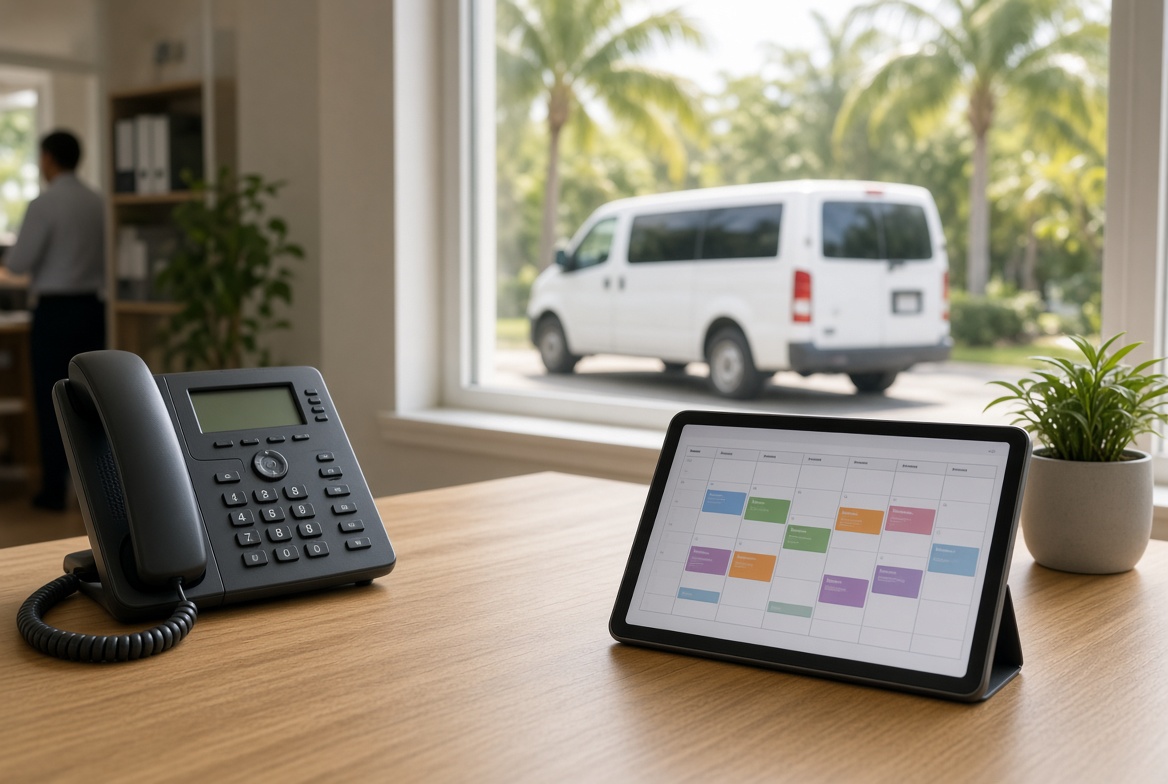
Call Us Is Not a Booking System
A homeowner in Riverview finds your cleaning company on Saturday morning. They want a weekly clean starting next week. They tap the main button on your site. It says Call Us.
They are in a parking lot. They will not sit on hold. They save the number and plan to call Monday. Monday they book the company that let them pick a window from their phone.
The phone still matters. It is not a booking system. A booking system captures the job, the window, and the next step even when nobody is free to talk.
Why a phone number is not a calendar
A phone number is a conversation starter. That is useful when the office is staffed and the customer can talk right now.
Most local service traffic does not arrive in that window. People search at night, on weekends, and between meetings. They want to lock a slot, not start a phone tag chain.
When Call Us is the only path, three things happen. The ready customer delays. The voicemail fills with half stories. The office spends the morning reconstructing jobs that should have already been on the board.
You can answer every call you get and still lose the jobs that never rang.
What happens after they hang up
Even a good call is not a booked job until the details live in one place. Name, address, service, window, and notes have to survive the walk from the phone to the calendar.
If that handoff is a sticky note, a text to a tech, or a memory, the slot is not real yet. The customer thinks they booked. Your board still has a hole.
That gap creates the expensive leftovers: double-booked mornings, missed confirmations, and the customer who calls back asking why nobody showed.
A Tampa cleaning crew that kept losing the slot
A three-team residential cleaning company in Hillsborough County ran a clean site and a busy phone. The homepage button was Call Now. The office manager answered during weekday hours and took notes on a pad.
Saturday and Sunday requests sat on voicemail. By Monday, several of those homeowners had already booked someone else. The calls that did convert still needed a second conversation to confirm a window, because the first call only captured a name and a neighborhood.
They did not rip out the phone number. They added a short request form on every service page: name, zip, type of clean, and two preferred days. Each request sent an automatic text that said the office would confirm a two-hour window the same business day.
Within a month, weekend inquiries stopped disappearing. The phone stayed for people who wanted to talk. The calendar filled from requests that used to die in voicemail.
What a real booking path actually includes
You do not need a public calendar that lets strangers grab any hour. You need a path that turns intent into a holdable slot.
For most plumbing, HVAC, landscaping, and cleaning crews, that path has five parts.
- A visible next step besides the phone, on mobile and on every service page.
- Three or four fields only: name, phone, service, and a preferred window or day.
- An automatic confirmation that the request landed, with a clear time they will hear back.
- One place the office sees every new request, not three inboxes.
- A same-day reply that offers a real window or two options they can accept by text.
Keep the click-to-call button. Some people still want to talk, especially on emergency work. Just stop making talk the only way a job can enter the system.
What the customer should be able to do without you
They should be able to tell you the job type. They should be able to leave a window that fits their day. They should know the request was received.
They should not have to explain the same story twice. They should not wonder if anyone saw the message.
A five-point diagnostic you can run today
Open your site on a phone and try to book the way a stranger would. Score each item honestly.
- If it is 8 p.m. on a Saturday, can a ready customer leave a complete request in under one minute?
- Does that request land in one list the office checks first thing, or does it split across email, texts, and voicemail?
- Do they get an automatic message that sets an expectation, or silence until someone happens to look?
- Can the office confirm a window by text without starting a new phone call?
- Once confirmed, does the job appear on the same board the crew uses, with notes attached?
If you miss three or more, Call Us is doing most of the work. That is why slots stay empty even when interest is there.
Four rules that stop leads from stalling
These rules fit a small Tampa Bay crew without a full software project.
- Never make the phone the only door. Put a short request path next to the number on the homepage and every service page.
- Capture the window on the first touch. “Tuesday morning or Thursday afternoon” is enough to start. You can tighten it later.
- Confirm the request before you confirm the job. A same-minute text that says you got it keeps them from calling the next shop.
- Close the loop the same business day. Offer one or two real windows. Let them accept by reply. Then lock it on the board.
Write the texts once. Use the same wording every time. The office should not invent a new script while the trucks are already rolling.
Keep the phone. Stop asking it to run the day
Owners keep Call Us because it feels personal. Customers like talking to a real person when the job is messy or urgent. That does not change.
What changes is the jobs you never hear. The Saturday request. The parent who cannot take a call during work. The neighbor who will hire the first company that gives them a window.
A focused booking flow does the quiet work the phone cannot do. It catches the request, holds the slot, and hands the office a clean next step. The conversation can still happen. It just does not have to happen before the job exists.
If your site still ends every page with Call Us, the leak is not a design problem. It is a missing system. Fix the path that turns a ready customer into a date on the board, and the phone gets to do what it is good at: talking to people who already have a place on the calendar.
Are the calls getting away from you?
I work with Tampa HVAC and plumbing companies that already run at least 3 trucks. Call or text me.