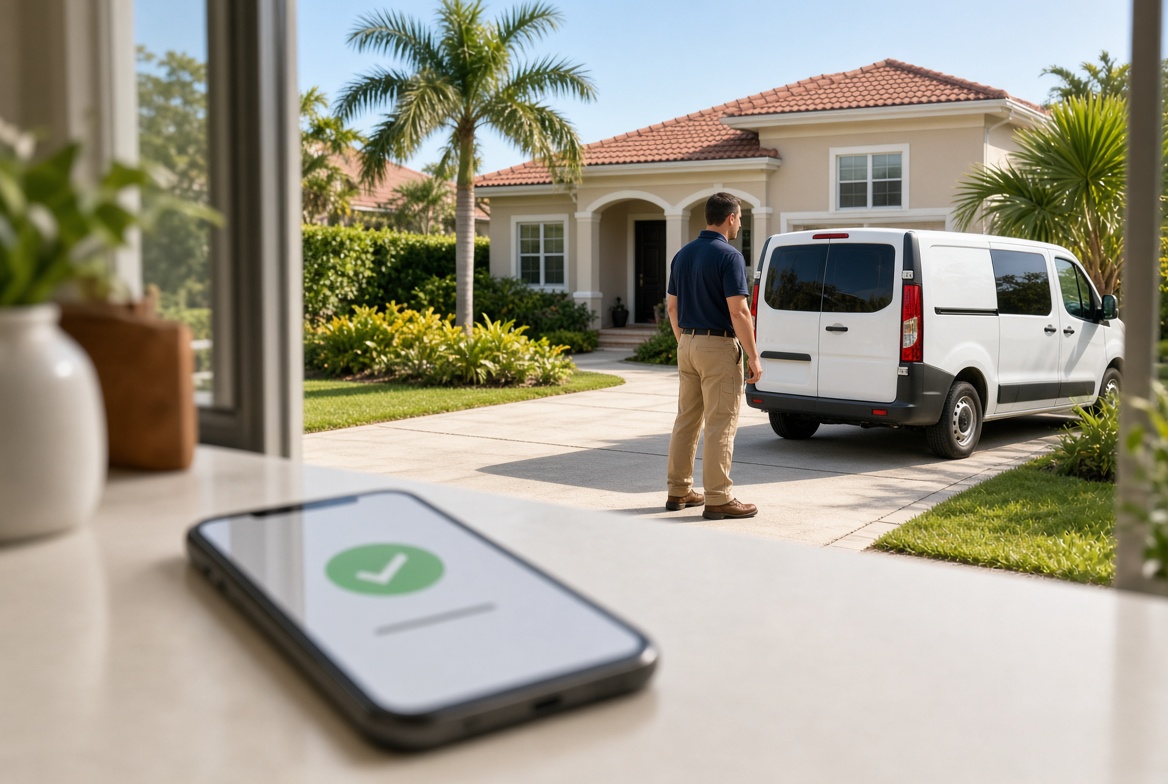
Confirm the Visit Details, Not Just the Time
A confirmation that only repeats the clock time feels finished to the office. To the customer, it is a reminder with holes. They still do not know where to park, what to clear, who is coming, or what the visit includes.
Those missing details turn into noon phone calls, locked gates, and a first hour that pays for itself in delay. A complete confirmation does one job. It sets the visit so the crew can start work instead of solving puzzles on the driveway.
Why a time stamp is not a confirmation
Most shops already send something. A calendar ping. A text that says Tuesday between 1 and 3. That is better than silence. It is not the same as preparing the house.
The customer treats that text as the plan. If parking, pets, access, or scope are missing, they fill the gaps themselves. They assume the tech can use the side gate. They leave for a school pickup. They expect a full replacement when you booked a diagnostic.
You pay for that guesswork in rolling time, not in software fees. The truck is already on the road when the real questions start.
What the customer still does not know
Think about the last job that started late for a “small” reason. The reason was rarely the clock. It was a detail nobody wrote down after the booking call.
These are the gaps that show up again and again:
- Where the crew should park without blocking a neighbor or an HOA lane.
- How to reach the work area if a gate, lockbox, or garage code is involved.
- Which pets need to be crated, and which rooms should be clear.
- What the visit includes, and what would be a separate approval.
- Who is arriving, and how the customer can recognize the truck.
- What happens if the window slips by 20 minutes.
None of that belongs in a group chat at 12:40. It belongs in the message that already goes out.
What belongs in the confirmation
Keep the message short. People skim on a phone. The goal is a complete visit card, not a novel.
Use this checklist as the standard. If a line does not apply, delete it. Do not leave a blank that someone has to interpret.
- Window, not a single minute. Give the arrival window you can keep, plus the city or neighborhood so the drive makes sense.
- Named service. Write the job in one sentence. “AC diagnostic and testing, not a replacement quote unless you approve extra work.”
- Who is coming. First name and a truck description beat “our technician.”
- Access. Gate, lockbox, parking note, and which door to use.
- House ready. Pets, clear path to the unit, breaker access, or a water shutoff if the trade needs it.
- How to reach the office. One number that someone answers during the window. Do not send them to a tech’s personal cell as the plan.
- What to do if plans change. A simple reschedule line so they do not ghost the slot.
Send it as soon as the job is on the board, then again the morning of the visit. The second send catches the spouse who never saw the first text.
How this played out for a Tampa HVAC company
A two-truck comfort shop in Carrollwood booked summer diagnostics the same way they always had. The office texted a window and the company name. Techs still spent the first 15 minutes on the driveway.
Gates were closed. Condensing units sat behind locked fences. Homeowners expected a same-day install because the word “AC service” felt bigger than a test and a report. The owner was fielding those calls from the next job.
They did not buy a new platform. They fixed the confirmation. Every booked diagnostic went out with the window, the tech’s first name, a one-line scope, parking and gate notes from intake, and a reminder that extra work needed a yes before parts came off the truck.
Within two weeks the pattern changed. Fewer “where are you” texts. Fewer surprise scope fights. The afternoon route stopped absorbing the morning’s missing details. Same trucks. Same techs. Clearer start.
A quick diagnostic for your last ten jobs
Pull the last ten booked visits, not the easy ones. Score each confirmation against the visit that actually happened.
- Did the customer know the window and the neighborhood?
- Could they name the service in one sentence before the truck arrived?
- Was access written down, or discovered on site?
- Did anyone call the office during the first 20 minutes with a “quick question”?
- Did the tech start work, or start a scavenger hunt?
If three or more jobs fail two of those checks, the confirmation is the leak. Fix the message before you add another tool.
Write the ten answers on one page. Patterns show up fast. The same missing gate note. The same vague service name. The same office number that rings to voicemail during the window.
Keep one format so the crew can trust it
A custom paragraph for every job sounds personal. It is how details fall out. The office writes a friendly text, skips the lockbox, and the field pays for it.
Use one template. The booking person fills the blanks during the first call or form. If a blank is empty, the job is not confirmed yet. That rule is sharper than another meeting about “better communication.”
The crew should see the same card the customer sees. When the text says side-gate code and the job sheet says front door, you have created a new problem. One source. One wording. One window.
Make the next booking carry the details forward
The confirmation is also a memory tool. Once you capture parking, access, and unit location, store it on the customer, not in a thread. The next visit should start with last visit’s facts already filled.
That is how a small team looks reliable without adding a dispatcher for every truck. The customer feels known. The tech stops asking the same three questions. Referrals come from jobs that simply started on time.
If those details still live in someone’s head, the website and the booking flow cannot help you yet. Put the facts in one place, send a complete confirmation, and let the route run the plan you already sold. A focused system does not have to be large. It has to make the next visit obvious for the office, the crew, and the customer.
Are the calls getting away from you?
I work with Tampa HVAC and plumbing companies that already run at least 3 trucks. Call or text me.