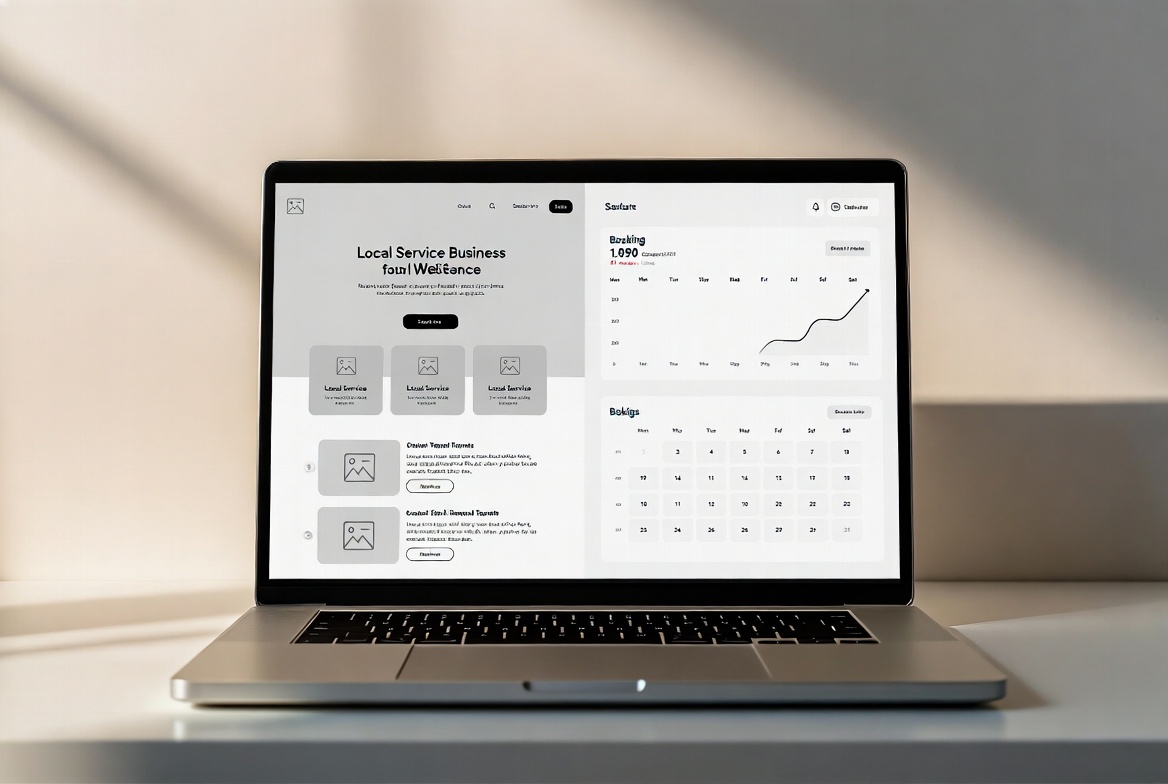
Pretty Websites Don't Grow Businesses. Growth Engines Do.
You invested in a website. It looks polished. The photos are high quality. Your logo sits perfectly in the header. Friends and family say it looks professional.
Yet the phone is quieter than you expected. Online inquiries trickle in slowly. Most new customers still come from word of mouth or the same handful of regulars.
That gap between a good looking site and a site that actually grows your business is bigger than most owners realize. One is a digital brochure. The other is a growth engine.
What a Pretty Website Really Does
A pretty website answers the basic questions. It shows your services, your location, and a few photos of your work. It proves you exist online.
That is useful. But it stops there. Visitors land on the page, look around for a few seconds, and leave. There is no clear next step. No reason to take action right now. No system that follows up if they hesitate.
In short, a pretty website informs. It does not convert. And for a local service business, conversion is the only metric that matters.
What a Growth Engine Actually Does
A growth engine is built around one goal: turning more of the right people into booked customers with less manual effort from you.
It starts with clarity. The homepage tells a visitor exactly what you do, who you help, and why they should choose you. No vague slogans. No walls of text. Just a clear promise and a simple path forward.
It continues with frictionless action. The booking or inquiry process takes seconds, not minutes. Forms are short. Buttons are obvious. The mobile experience works the first time.
Then it works after the visitor leaves. Automated reminders, follow up sequences, and review requests keep the relationship moving without you having to remember every step.
Finally, it feeds you useful information. You see which pages bring the most calls, which services get the most bookings, and where people drop off. That data lets you improve what actually drives revenue.
The Real Cost of Staying Pretty
Every week your website sits as a brochure, you lose potential revenue in three quiet ways.
- Visitors who were ready to book leave because the process felt unclear or slow.
- Past customers who might have returned never get a timely reminder or easy rebooking option.
- You keep spending time answering the same basic questions by phone or text instead of letting the site handle them.
Those small losses add up. Over a year they often equal more than the cost of building a site that actually works.
How to Tell Which One You Have
Look at your current website with these questions:
- Can a first time visitor book or request a quote in under 60 seconds on their phone?
- Does the site make it obvious what happens next after they take action?
- Do you receive automatic notifications and customer confirmations without manual work?
- Can you see, in one place, how many people visited, how many took action, and which services they cared about?
If the honest answer to most of those is no, you have a pretty website. Not a growth engine.
Moving From Brochure to Engine
You do not need a complete rebuild overnight. The shift usually starts with three practical changes.
First, tighten the message. Rewrite the homepage so a stranger understands in five seconds what you offer and why it matters to them. Remove anything that does not support that clarity.
Second, remove friction from the next step. Make booking or inquiry the most obvious action on every page. Keep forms short. Confirm the request immediately so the customer feels taken care of.
Third, connect the site to simple systems that work while you are busy. Automatic reminders, review requests, and basic follow ups recover customers you would otherwise lose to forgetfulness or competition.
These changes do not require complex technology. They require intentional design around the real goal: more booked work with less chaos.
What Changes When the Engine Works
Owners who make this shift usually notice the same results. More inquiries arrive already qualified. Calendar gaps start to fill without extra marketing spend. Staff spend less time chasing details and more time delivering the service.
The website stops being something you update once a year and becomes a quiet, reliable part of how the business runs every day.
That is the difference. A pretty website looks good when people visit. A growth engine helps the right people become customers and keeps the operation moving smoothly afterward.
If your current site is still acting like a brochure, the next useful step is simple. Look at it through the eyes of a busy customer who has never heard of you. Then ask whether it makes the decision to work with you easier or harder. The answer usually points the way forward.
Ready to modernize your business?
We build fast, modern websites designed for small businesses like yours.