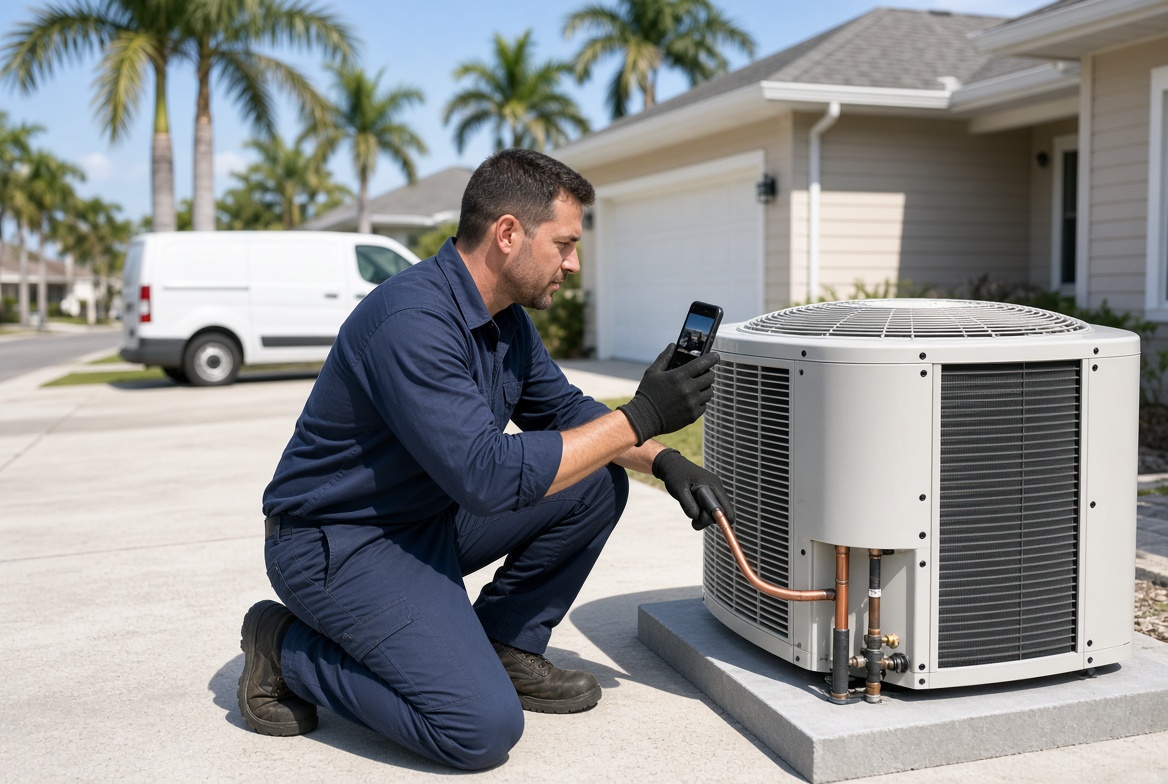
Leave Job Photos Before You Pull Away
The job looks done. The truck is packed. Then two days later the homeowner texts a photo of a loose panel and asks why the work was left unfinished.
That argument is expensive even when you win it. A two-minute photo closeout, taken before you leave the driveway, gives you proof, cuts callbacks, and makes the next booking easier.
Finished work still gets disputed
Most service owners treat photos as marketing. Nice before-and-after shots for the website. Maybe a story on social.
The photos that protect the business are duller. They show what was done, where it sits, and that the site was left clean. They live with the job record, not in a tech's camera roll.
When those pictures do not exist, the office has to reconstruct the visit from memory. The customer has a phone full of angles that look worse than the work. You end up sending a truck back to prove a point.
What a photo closeout actually includes
You do not need a photo shoot. You need a short, repeatable set that answers the questions customers ask after you leave.
- Wide shot of the work area after cleanup
- Close shot of the completed repair or install
- Model or serial plate when a part was replaced
- Any existing damage that was already there
- A final shot of the thermostat, breaker, or control the customer will use
Five pictures. Same order every time. Named and saved to the job before the van moves.
If the work is inside a tight closet or attic, add one photo of the access path. That single image stops a surprising number of "you left a mess" messages.
A water restoration crew in Brandon
A small water restoration company serving Brandon and Riverview used to close jobs with a verbal walkthrough and a paper sign-off. Techs were good. Customers still called two days later about stains, baseboard gaps, or a fan that "never ran."
The owner started requiring six photos before the last person left the house: moisture meter reading, dried wall, replaced baseboard, equipment placement, floor after cleanup, and the signed completion sheet on the counter.
In the first month they avoided four return trips that would have been free "goodwill" visits. Two customers who had been ready to argue calmed down after the office texted the closeout set. The same photos later filled a simple gallery the company used when quoting similar losses.
No new software platform. They used the phones they already had and a shared job folder with the address as the name.
A six-step closeout you can run today
Use this as a field checklist. If a step is skipped, the job is not closed.
- Tell the customer you are taking completion photos so they have a record too.
- Shoot the five standard angles in the same order on every job.
- Capture existing damage in one extra frame and say it out loud so it is not a surprise later.
- Save the set to the job record before you start the truck. Not after lunch. Not tonight.
- Send the customer two or three of those photos with a one-line summary of what was finished.
- Add one next step: review request, maintenance date, or the follow-up visit already on the calendar.
The send step matters as much as the shooting. A customer who already has the photos rarely accuses you of hiding work. They also have something easy to forward to a neighbor.
What you should see in 30 days
Track three numbers. Keep the list on a sticky note if you have to.
- Return trips that were not billed
- "You didn't finish" messages after a completed job
- Reviews or referrals that mention the photos or the clean wrap-up
A two-truck HVAC shop in Pinellas that adopted this habit saw courtesy callbacks drop within three weeks. The office stopped playing detective with group texts. Techs spent less time defending work they had already done well.
The side benefit is hiring. New techs learn the standard by copying last week's photo sets. You can see who rushes the closeout without riding along.
Why the habit dies after week two
Photo closeouts fail for the same reason most field rules fail. The pictures land in the wrong place, and nobody uses them when a complaint comes in.
If the only copy sits on a personal phone, the process is theater. If the office has to hunt through a camera roll during a tense call, the tech will stop bothering.
Put one rule in writing. Photos belong to the job, not the person. The job is not complete until the set is in the shared record and the customer has received a short wrap-up text.
Owners who stay consistent do one more thing. They spot-check five jobs a week. Not to catch people. To keep the standard visible. When a set is missing, the conversation is short: go back to the standard, not a lecture.
Make the closeout part of the system
A website that books the job is only half the loop. The other half is a clean handoff from the driveway to the office and back to the customer.
That can be a simple job record with a photo slot, a booking flow that already has the customer phone number ready for the wrap-up text, or a small internal tool that will not let a job flip to "complete" without the closeout set.
You do not need a stack of apps. You need one place where the finished work is visible, the customer already has proof, and your crew can leave the site without dragging the job home in their pocket.
Are the calls getting away from you?
I work with Tampa HVAC and plumbing companies that already run at least 3 trucks. Call or text me.