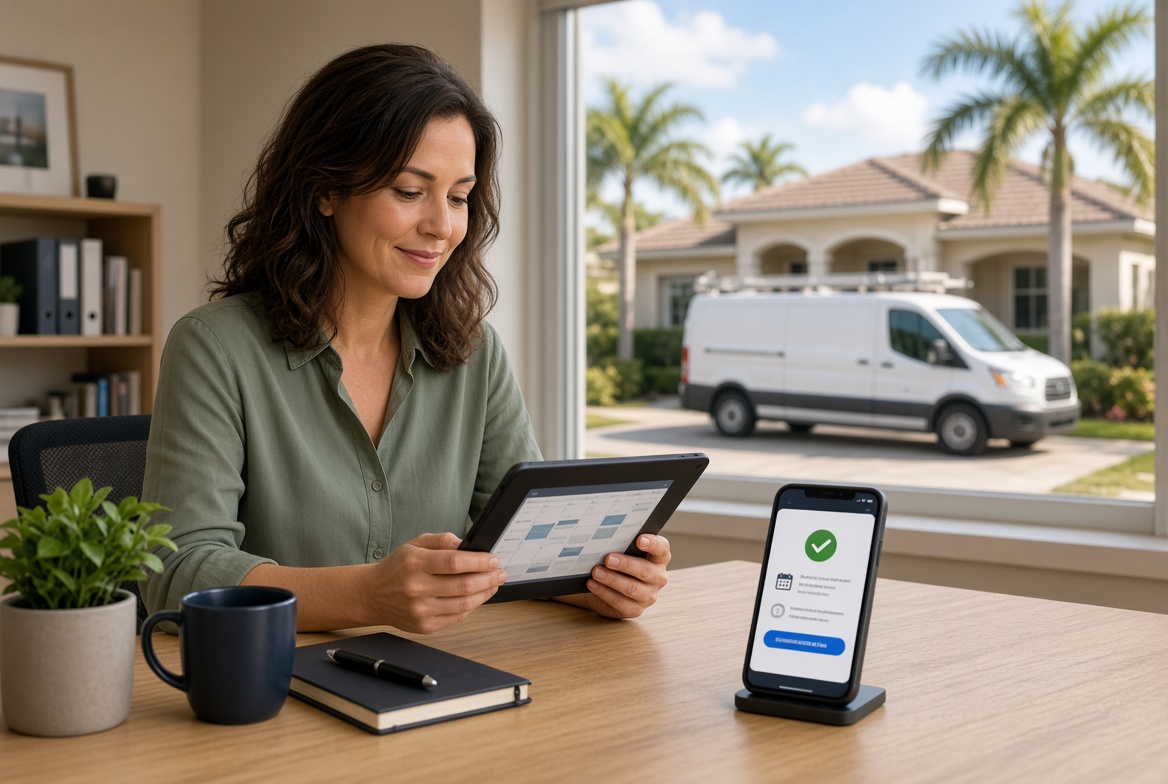
Let Them Reschedule Without Calling You
A booked job is not finished work until someone shows up. When a homeowner needs a new time and the only option is to call the office, two things happen at once. Your line fills with a change request, and the original slot sits in limbo until someone answers.
That delay is how good jobs become empty trucks. A simple reschedule path lets the customer pick a new window, frees the old slot, and keeps your office on the next incoming lead instead of playing phone tag.
Phone-only changes stall the whole day
Most local service companies treat rescheduling like a conversation. The customer leaves a voicemail. Someone calls back between stops. They miss each other. By early afternoon, the original window is still on the board and nobody is sure if the crew should roll.
Meanwhile the office is doing two jobs. It is trying to save one appointment and still answer new calls from people who want work this week. The change request wins the attention. The new lead waits, then tries the next company on the list.
This is not a people problem. It is a path problem. If the only way to move a slot is a live call, every life change on the customer side becomes a traffic jam on yours.
What a stuck reschedule actually costs
Count the hidden hits, not just the empty drive. A cancelled or fuzzy slot wastes more than the labor hour you already reserved.
- The original window stays blocked while you wait for a callback.
- A nearby job that could have filled that gap never gets offered the time.
- The customer who could not reach you books a competitor for "tomorrow morning."
- The tech sits in a driveway, then texts the office for an update that nobody has.
- Your review risk goes up because the visit felt sloppy even if the work would have been fine.
One messy change does not sink a company. A week of them makes the calendar look full while the trucks stay light.
A Tampa Bay AC job that should have stayed booked
Picture a small HVAC crew in Brandon in late September. A homeowner booked a Tuesday afternoon diagnostic after a weekend of weak cooling. Tuesday morning, school pickup moved and a work meeting ran long. She is not cancelling. She needs 4:30 instead of 1:00.
She calls the shop number at 9:10. The owner is already on a rooftop. She leaves a voicemail. She tries once more at lunch and gets a "we will call you back" message. At 12:40 she still has no new time, so she texts a neighbor for another company that can "just come this evening."
Your tech still has her address on the afternoon list. The office finds the voicemail at 1:15. The slot is gone, the customer is gone, and you spent the morning protecting a job that had already walked.
If she could have tapped two open windows from the confirmation text, the 1:00 slot would have opened for a same-day leak call in Town N Country. The 4:30 visit would have stayed yours. Nobody would have needed a callback to make that true.
Give customers a move path, not another hold message
You do not need a giant scheduling platform. You need one clear rule: a booked customer can request a new window without waiting for a person to pick up.
Use this sequence on every confirmed job.
- Send a confirmation that names the date, the arrival window, and a link or reply keyword to change it.
- Show only the next two or three openings that fit the same job type and zip area.
- Require a cutoff, such as 6:00 p.m. the night before, so the morning route can lock.
- When they pick a new time, free the old slot in the same step. Do not leave both times reserved.
- Text the customer and the assigned tech the new window immediately.
- If no window fits, collect two preferred days and put a person on it within one business hour.
The point is speed with guardrails. The customer should feel in control. You should still control capacity, travel time, and which jobs can slide.
What the customer should see in under a minute
Keep the change screen short. Long forms make people call anyway.
They need four things on one screen or in one text thread:
- The current appointment in plain language, not an internal job code.
- Two or three real openings, not a blank calendar that looks empty.
- A note on how late they can change it without a fee or a same-day scramble.
- A way to leave a reason in one line, such as "work meeting" or "need evening."
If you take deposits, say whether the deposit moves with the new time. Silence on money creates a second call, which is the exact load you are trying to remove.
Keep control so the route does not fall apart
Owners worry that self-serve changes will wreck a tight Tampa route. That happens only when every slot looks available to every customer.
Set a few hard rules before you turn the link on.
- Do not offer a new time that sits on the other side of the bay from the rest of the day's stops.
- Do not let emergency diagnostics bump a paid install without a person approving it.
- Do not allow same-morning changes after the trucks have left the shop.
- Do not hide the old job. Keep the original notes, photos, and access details on the new time.
A landscaping company in Pinellas can use the same idea. A Friday mow that moves to Monday should not land in a neighborhood the crew will not touch until Wednesday. The tool can show Monday morning in that zone and hide the rest.
A 15-minute diagnostic for your current process
Walk last week's calendar with one question: how did people change a time?
- How many jobs moved, cancelled, or went silent after a "need to reschedule" voicemail?
- How long did it take for someone on your team to confirm the new window?
- How many of those original slots stayed blocked after the customer was already gone?
- How many new leads called during that same window and reached a busy tone or a hold message?
- Which changes could have been a two-tap pick from a short list of openings?
If you cannot answer those from the calendar itself, the process lives in memory. Memory does not scale past one person answering the phone.
Lock the new time the same way you booked the first one
A moved job needs the same closeout as a new one. Send the fresh window. Repeat the arrival rule. Attach the gate code, the pet note, and the photo from the last visit. Then release the old slot so dispatch can fill it before lunch.
When that loop is clean, reschedules stop feeling like damage control. They become a small system that protects booked work and opens space for the next customer who is ready right now.
If your website can take the first booking but cannot move it without a phone chase, the leak is not marketing. It is the last mile of the booking flow. A focused calendar, a short change link, and a same-step confirmation give a small crew a calmer day and more jobs that actually get done.
Are the calls getting away from you?
I work with Tampa HVAC and plumbing companies that already run at least 3 trucks. Call or text me.