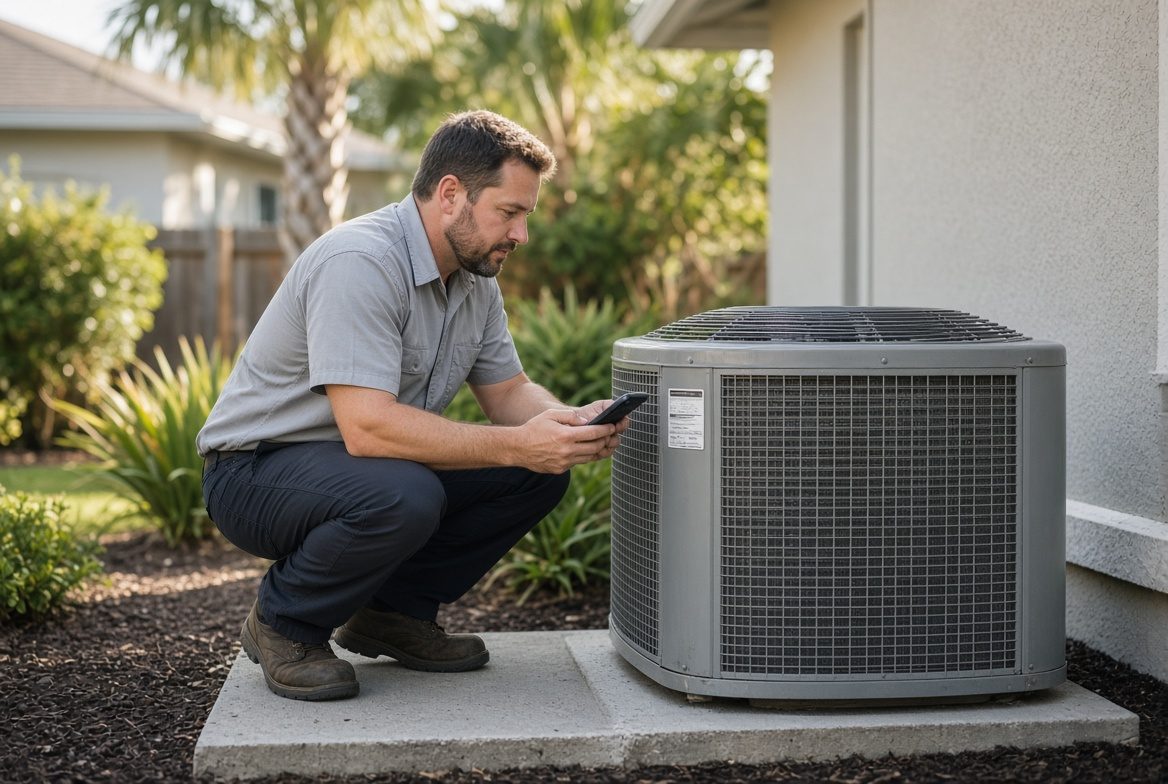
Save Unit Details on the First Visit
The first visit is when the equipment is easy to read. The sticker is clean, the homeowner is home, and a tech is already in the closet, on the roof, or next to the condenser. Most crews still leave with a photo of the finished work and almost nothing about the unit itself.
Six months later that house needs a part, a flush, or the right filter size. Someone is on the phone asking a customer to climb a ladder and read a faded label. That is not a hard job. It is a missing field, and it slows the next booking.
Why the second visit pays for the missing note
Return work should be the easy money. You already know the house. You already earned a little trust. The only thing that should change is the task.
Instead, the office starts from zero. Which brand sits in the yard. Which tonnage. Which filter size. Whether the disconnect is behind a locked side gate. The tech rolls with a guess, then spends the first twenty minutes collecting facts that were visible last spring.
That lost time does not show up as one ugly invoice. It shows up as a late arrival on the next stop, a second trip for a part, and a customer who wonders why you sound new every time they call.
What unit details actually means
This is not a novel. It is a short nameplate record that another person can use without calling the first tech.
For HVAC, plumbing, and similar trades, the useful set is small:
- Brand, model, and serial number
- Age or install year, if you can see it
- Location of the unit and how you reach it
- Filter size or other consumable that will come up again
- One photo of the nameplate, in focus
- One photo of the unit in place, so the next tech recognizes the setup
That list fits on a phone. It does not need a full equipment database on day one. It needs a habit and one place to put the result.
A seven-point capture checklist
Use this at the end of every first visit, before the truck leaves the driveway.
- Stand in front of the nameplate and take one still photo. No thumb. No glare if you can help it.
- Type the model and serial into the job card. Do not assume the photo will be searchable later.
- Note the unit location in plain language: south wall, attic hatch in the hallway, closet behind the pantry.
- Write how you got in: gate code, lockbox, dog plan, HOA parking rule.
- Record the filter size or other part that will be needed on a normal return.
- Add one line about condition: rusted stand, tight clearance, no pad, shared disconnect.
- Mark the job complete only after those fields are filled. A finished job with an empty equipment line is not finished.
If a field is truly unreadable, say so. "Serial worn off, photo attached" is useful. A blank box is not.
How this played out for a Tampa HVAC shop
A two-truck cooling company in Brandon ran a busy spring on tune-ups and capacitor calls. The owner kept hearing the same radio traffic. Techs asked the office for model numbers. The office asked the homeowner. The homeowner was at work.
One Wednesday a return visit in Riverview sat in the driveway for 25 minutes while the tech tried to read a sun-bleached sticker on an older condenser. The part he had on the truck was close, not right. He left for a supply house on Causeway Boulevard, then came back. The next homeowner in Valrico got a late window and a short apology.
The shop did not buy new software that week. They added four required fields to the job card and a rule: no closeout without a nameplate photo. Within a month, filter-change days started with the right size already on the truck. Quote calls for replacements went faster because the office could name the existing system without a second visit.
The work did not get easier. The guessing did.
Where the notes should live
A photo in a camera roll is not a record. A text in a group chat is not a record. A note in the first tech's head is not a record.
The test is simple. Can a different person pull the house up tomorrow and answer three questions without calling anyone?
- What equipment is on site?
- Where is it, and how do we reach it?
- What did we already tell this customer?
If the answer is "maybe, if that tech is working," the file does not exist yet. Put the details on the same job card you already use for the address and the arrival window. Attach the photos there. When the next booking comes in, copy that card forward instead of starting a blank one.
Shared spreadsheets can hold this for a single truck. Once two crews are in the field, the sheet lags, two people edit the same row, and the photo never makes it in. A simple job record beats a clever grid.
A rule that makes the habit stick
Good intentions fade on a hot afternoon. A closeout rule does not.
Make equipment capture part of "done," the same way you already treat payment and a completed checklist. The office should be able to see a blank model field and send the job back before the tech is across town.
Keep the standard short enough that a new hire can follow it on day two:
- Nameplate photo plus typed model and serial
- Unit location and access note
- Filter or consumable size when it applies
Review ten closed jobs every Friday. If three of them are missing the photo, the rule is not real yet. Fix the closeout, not the speech in the morning meeting.
What to fix this week
You do not need a full equipment catalog to stop the scavenger hunts. You need the next ten first visits to leave a usable file.
- Pick the three fields you will require. Model, photo, and location are enough.
- Put those fields on the job card you already close against.
- Tell the crew the job is not closed until they are filled.
- Have the office check the card before the next day's route is locked.
- Use the file on the very next return visit so the team feels the payoff.
The payoff is practical. Faster quotes. Fewer parts runs. A customer who does not have to re-explain the house. A second tech who can walk onto a property and look like they have been there before.
If job details still live in camera rolls and side texts, the next busy season will charge you for the same facts again. A focused job record, tied to a clean booking flow, turns the first visit into an asset instead of a story the office has to reconstruct. That is the kind of small system that keeps more of the work you already earned.
Are the calls getting away from you?
I work with Tampa HVAC and plumbing companies that already run at least 3 trucks. Call or text me.