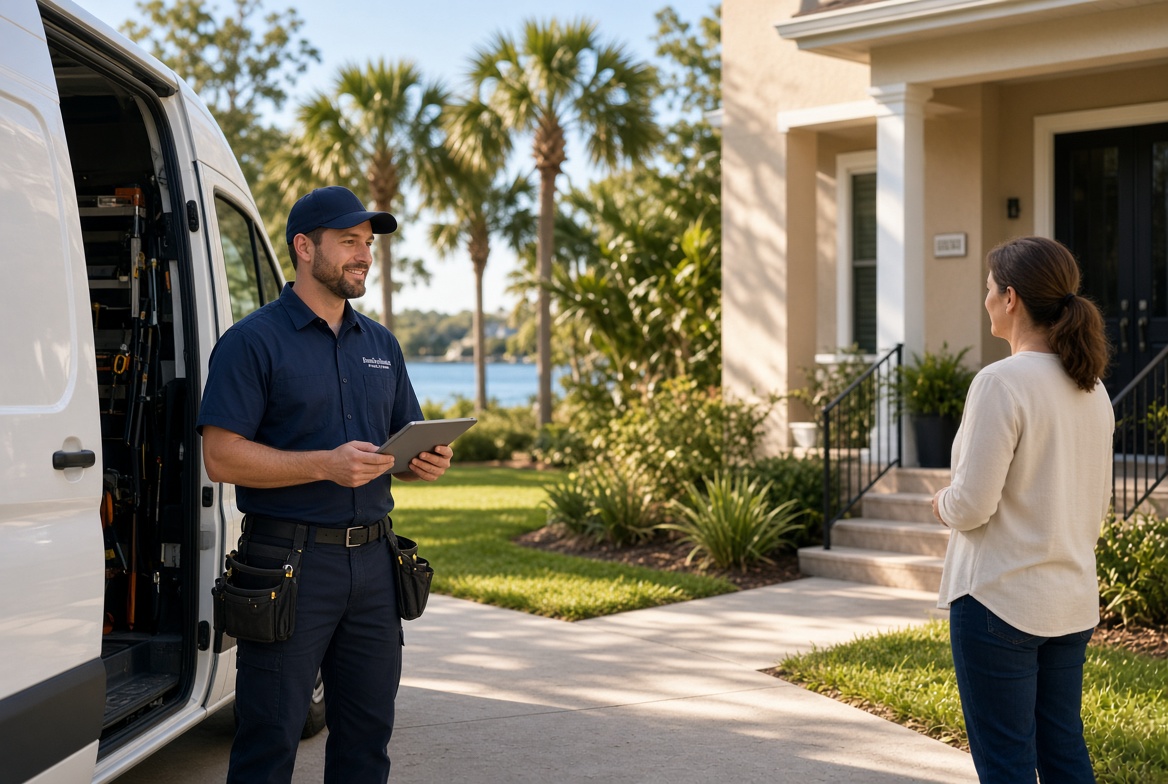
Send the Quote Before You Drive Off
The estimate visit went well. The homeowner nodded along. Your tech explained the options, answered the questions, and packed up the tools.
Then everyone agreed to "talk it over." The typed quote went out that night or the next morning. By then the customer had already texted two other companies. The job you earned in the house became a price comparison.
The fix is not a harder close. It is a faster, clearer quote while you are still on site, plus one simple next step the customer can take before you pull away.
Why quotes go cold so fast
Local customers are not stalling to be difficult. They stall because the next step is fuzzy and the number is not in their hands yet.
Once you leave, three things happen quickly. The details fade. Other bids arrive. Life interrupts. A quote that lands hours later has to restart the whole conversation.
That delay is expensive for a small crew. You already spent the drive time, the diagnostic, and the explanation. A cold quote means you pay that cost again if you want the work.
What "done" should mean before you leave
A finished visit is more than a working diagnosis. It is a shared record of what you found, what you recommend, and what it costs to move forward.
The homeowner should be able to look at one short document on their phone before you start the van. If they cannot, the visit is only half finished.
This does not mean you pressure people in the driveway. It means you remove the waiting period that lets a good visit go quiet.
A same-visit quote checklist
Use this before the tech leaves the property. If any item is missing, the quote is not ready.
- Write the problem in plain language the customer used, not just part names.
- List the recommended fix and one backup option when it is real.
- Show the price as a clear total, with what is included and what is not.
- Attach two or three photos from the job so the customer can remember what they saw.
- Offer the next available install or repair window, not a vague "we will call you."
- Send the quote to the customer's phone before you pull out of the driveway.
- Ask one direct question: do they want to lock the next slot or think it over until a set time?
That last question matters. "Think it over" with no deadline is how good jobs disappear. A same-day reply window keeps the decision active without feeling pushy.
How a Tampa HVAC crew changed the pattern
A two-truck HVAC company serving Hillsborough and Pinellas used to write estimates back at the shop. Techs took photos, scribbled notes, and emailed a polished quote after dinner.
Close rates on those visits sat around one in three. The owner assumed price was the issue. When they tracked timing, a different picture showed up. Quotes sent the same hour booked far more often than quotes sent the next morning.
They made three changes. Techs built the quote on a tablet before leaving. The office had already loaded labor rates and common parts, so the number took minutes, not an hour. Every quote included the next two open install days.
Within a month, more customers booked before the van left the street. The quotes that still needed a follow-up were easier to close because the photos and options were already in the customer's messages.
What belongs in a driveway quote
Keep it short enough to read standing in a kitchen. Long PDFs feel official and still get ignored.
Include the customer name, address, date of the visit, and the tech's name. People trust a quote that looks like it came from the person they just met.
State the recommended work in one paragraph. Then put the price. If there is a range, explain what moves the number, such as a part that still needs confirmation.
- What you found
- What you recommend
- What it costs
- When you can do the work
- How they say yes
The last line is the one most crews skip. "Reply YES to hold Thursday morning" beats "Call the office when you decide."
When you still need a follow-up
Some jobs cannot be priced on the spot. Rare parts, permit questions, or a second opinion from the shop are real reasons to wait.
Even then, leave something behind. Send a same-visit summary of what you found, the photos, and the time you will send the final number. That keeps you first in line while you finish the details.
Set a rule for the follow-up. If the final quote is not out within a few hours, someone owns that delay. Quotes that sit until the next day should be the exception, not the habit.
Make the next step obvious
A quote without a booking path is a brochure. Give the customer one easy action: reply to the message, tap a booking link, or approve the slot you already offered.
If they need to talk to a spouse, ask when that conversation will happen and put a reminder on your side. A short check-in at the time they named is helpful. A vague "just circling back" two days later feels like a sales call.
Track two numbers for a month: time from visit to quote sent, and percent of quotes booked within 24 hours. Those two measures tell you if the driveway process is working.
Most local service teams do not lose quoted work because they are bad at the trade. They lose it in the gap between a good visit and a late message. A focused system that lets your crew send a clean quote, a photo record, and a bookable next step from the job site closes that gap. The website and booking flow should support the same idea: one clear number, one clear action, no waiting around for the office to catch up.
Are the calls getting away from you?
I work with Tampa HVAC and plumbing companies that already run at least 3 trucks. Call or text me.