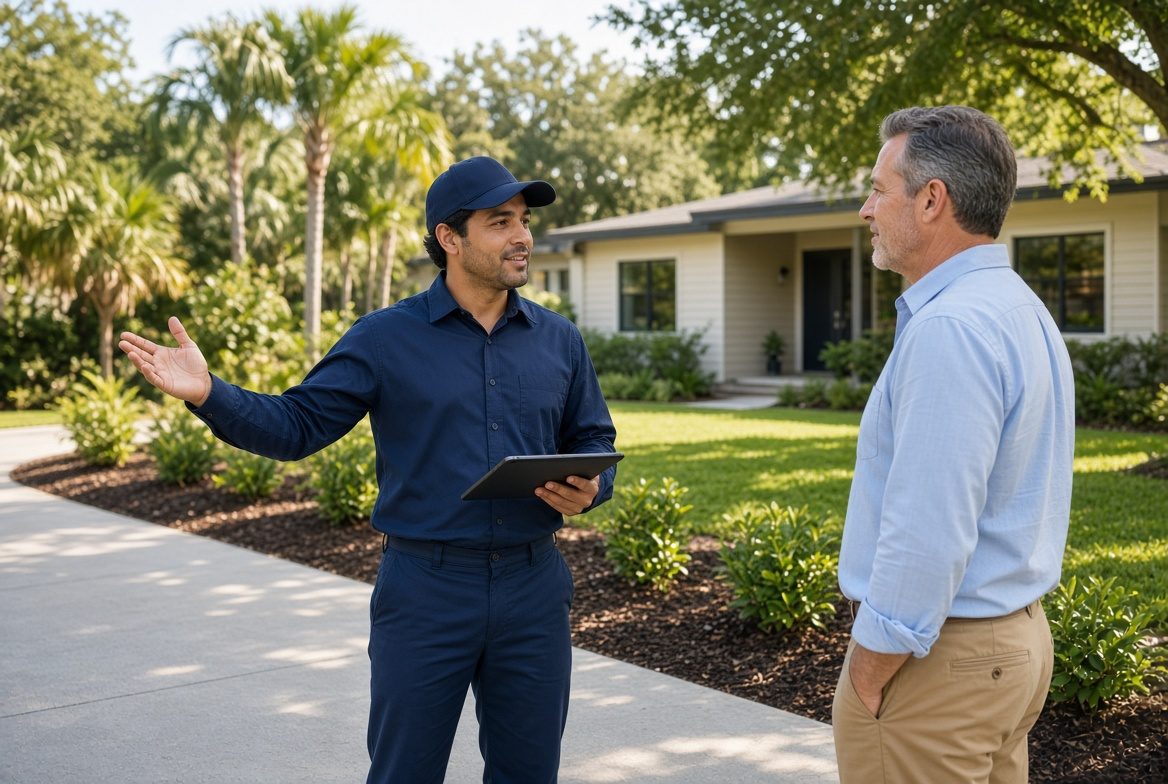
Turn first visits into repeat work
You finished the job. The customer paid. Then the phone went quiet.
That quiet stretch is expensive. The first visit is when trust is highest, the work is fresh, and the next service is easiest to book. Most local crews treat that moment like the end of the story. The companies that grow treat it like the start of the next one.
Why first jobs stall out
A first visit is messy by nature. The crew is learning the property. The office is still matching a name to an address. The customer is deciding if you are “their people” or just the vendor who showed up this time.
If nothing structured happens after the work, the customer defaults to shopping again next season. Not because you did a bad job. Because nobody made the next step obvious.
The stall usually shows up in four places:
- No clear arrival window, so the first impression is already shaky
- No photos or notes the office can reuse later
- An invoice that arrives days later, when the goodwill has cooled
- Zero follow-up that names the next service and a date
None of those require a big software stack. They require a close-out you actually run.
What the customer is quietly scoring
Homeowners rarely write a scorecard. They still keep score.
They notice if you showed when you said you would. They notice if the tech explained the work in plain language. They notice if the yard or the unit looked better than they expected, and if someone told them what should happen next.
They also notice the gaps. A surprise add-on with no photo. A “we’ll send the bill” that takes a week. A truck that leaves without anyone asking if they want the seasonal follow-up.
Those gaps do not feel dramatic in the moment. They are why a good first job still becomes a one-time job.
A Tampa Bay example
Take a lawn and landscape crew working Lutz, Land O’ Lakes, and north Tampa. March is mulch and cleanup. July is irrigation checks and turf stress. September is storm cleanup. The same properties need all three.
One crew finished a $1,400 spring bed refresh and sent a PDF invoice three days later. No photos in the file. No note that the homeowner asked about a fall pine straw pass. No date on the calendar for a summer visit.
By June the homeowner had two other quotes in the inbox. The original crew had done fine work. They just left the relationship unfinished.
A second crew on a similar street did the same dollar job, then ran a 10-minute close-out before the truck left. Photos went to the office. The invoice went out that afternoon. The owner got a short message offering a mid-summer check in the second week of July, with a two-hour window already proposed.
That second job turned into a $4,200 year because the first visit had a next step.
The 10-minute close-out
Build a close-out that a tech can finish in the driveway. If it takes a half hour of office work later, it will not happen on busy days.
- Capture the proof. Three to six photos: before, after, and any issue you flagged. Label the address once so the office is not guessing later.
- Write one sentence the next tech can use. Gate code, dog, HOA rule, “homeowner wants text not calls.” That sentence saves a callback.
- Send the invoice the same day. Same-day billing keeps the work and the payment in the same memory. Late invoices feel like loose ends.
- Name the next service. Not “let us know if you need anything.” Name the work and a window: “irrigation check the week of July 14.”
- Ask for the review while you are still there. A simple link, sent before the truck rolls, beats a reminder two weeks later.
Five steps. Ten minutes. The point is not polish. The point is that every first job leaves a trail the business can use.
A quick diagnostic
Pull the last 20 completed first-time jobs. Ignore how you felt about the work. Look at the file.
- How many have photos the office can find in under a minute?
- How many have a next-service note with a month attached?
- How many were invoiced the same day?
- How many got a review request within 24 hours?
- How many booked a second job within 90 days?
If fewer than half have photos and a next step, you do not have a marketing problem. You have a close-out problem.
The 90-day repeat rate is the number that matters. Ads can fill the calendar. They cannot replace a customer who already trusts you and already has your crew on the property.
What to say before you leave
Techs do not need a script. They need two sentences they will actually use.
First: “Here’s what we did today, and here’s the one thing I’d watch over the next month.” That proves you looked at their place, not a generic checklist.
Second: “The usual next visit for homes like this is [service] in [month]. Want us to hold a window?” That turns a vague “call us” into a decision.
If they say not now, log it. A “not now” with a month attached is still useful. A “not now” that vanishes into a text thread is how first jobs stay first jobs.
Keep the office in the loop without extra meetings
The close-out fails when the driveway notes never reach the person who books the next job.
Pick one place the notes live. Not the tech’s camera roll. Not a group chat that scrolls away by Friday. One list, one job record, one follow-up date.
Then give the office a short daily pass:
- Any job closed yesterday missing photos?
- Any invoice still unsent?
- Any promised follow-up date that has no calendar hold?
Fifteen minutes in the morning protects the work you already paid to win.
Repeat work is a system, not a personality
Owners often assume repeats come from being likable. Likable helps. It is not a process.
Repeats come from a first visit that felt controlled, a bill that arrived while the result was still visible, and a next step that did not require the customer to start over.
That is also how referrals start. People recommend the company that made the second visit easy, not the company that did one good afternoon and disappeared.
If your growth plan is “do good work and hope they call back,” you are leaving the highest-trust moment in the business unused.
A focused system makes that moment hard to skip. A cleaner job record, a same-day invoice, and a booking flow that can hold the next window will do more than another round of ads. The first visit already cost you the drive, the crew, and the attention. Finish it so the next job has a place to land.
Are the calls getting away from you?
I work with Tampa HVAC and plumbing companies that already run at least 3 trucks. Call or text me.