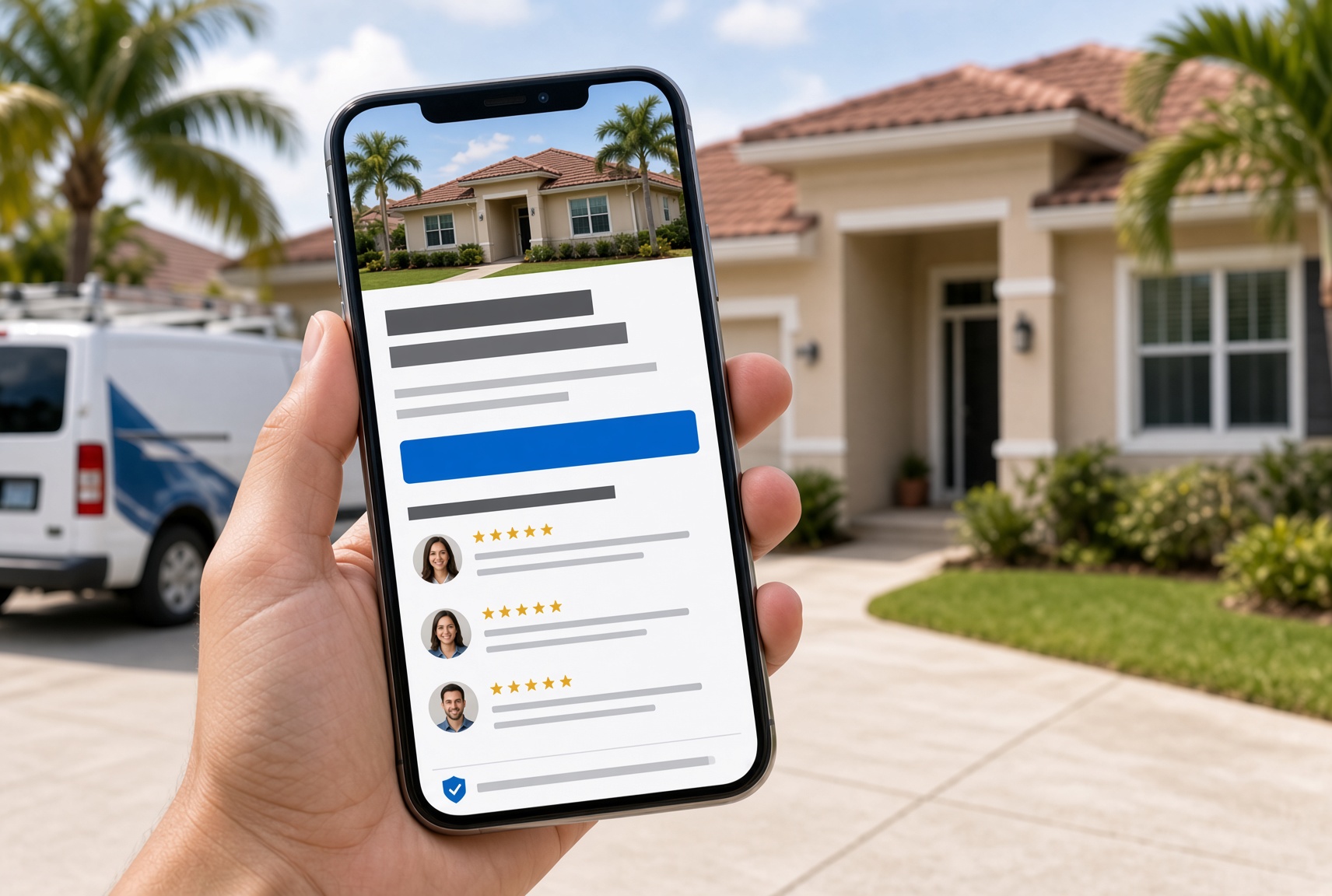
Why Service Pages Lose Leads Before the Call
Your service pages are quiet for a reason
Most local service owners look at their website traffic and wonder why the phone is not ringing. The traffic is there. People are landing on the HVAC page, the plumbing page, or the landscaping page. Then they leave without calling.
That quiet stretch between a page view and a phone call is where money disappears. The visitor already needs the work. They just do not trust you enough yet to pick up the phone.
Service pages lose leads before the call for the same handful of reasons every time. Fix those and the same traffic starts converting into booked jobs instead of silent exits.
What a service page has to prove in under 30 seconds
A homeowner in Tampa Bay who needs an AC repair is not shopping for design awards. They are deciding whether you look like the kind of company that will show up, do the job right, and not leave a mess.
In the first half-minute they scan for three things:
- Proof that you actually do this work in their area
- Evidence that other people like them were happy
- A clear next step that feels low-risk
If any of those three is missing or hard to find, the visitor keeps scrolling or hits the back button. They never reach the call button. The page did its job of ranking, but it failed at the only job that matters: earning the call.
The five trust gaps that kill the call
Here are the gaps that show up most often on local service sites. Each one is fixable without a full redesign.
1. No local proof
A generic “Serving the greater Tampa area” line does almost nothing. Visitors want to see neighborhood names, city names, or even a simple map of recent jobs. Without that, the page feels like it could belong to any company in Florida. Local proof turns a random visitor into someone who thinks “these people work near me.”
2. Thin or missing reviews on the page itself
Linking to a Google profile is better than nothing, but it forces the visitor to leave your site. The strongest pages show three to five recent, specific reviews right on the service page. “Fixed our outdoor unit in Carrollwood on a Friday afternoon” lands harder than a five-star average. Specificity builds trust faster than ratings alone.
3. Photos that look staged or stock
Real job photos beat polished stock images every time. A clean before-and-after of a water heater install or a crew standing next to a finished landscape bed tells the visitor you actually do the work. Stock photos of smiling technicians in perfect uniforms create the opposite feeling. Visitors notice the difference even if they cannot explain why.
4. Vague guarantees or none at all
People worry about being stuck with a bad job. A short, plain-language guarantee (“We stand behind the work for 12 months” or “If we are late, the first hour is free”) removes a big piece of risk. Vague marketing language does not. The clearer and shorter the promise, the more it helps.
5. The call-to-action is hard to find or feels high-pressure
A single phone number at the very top is good. A phone number buried at the bottom after three paragraphs of copy is not. The best pages also offer a simple “Request a callback” option so the visitor does not have to talk right that second. Making the next step easy removes the last bit of friction.
A real example from a Tampa Bay HVAC company
One residential HVAC company in the Tampa Bay area had solid traffic on their “AC Repair” page. Google ranked them for the main local terms. Yet the call volume stayed flat month after month.
When we looked at the page, the problems were obvious. The only review was a single Google badge. The photos were stock. The guarantee was one vague sentence. The phone number sat at the bottom of a long block of text.
They made four changes in one afternoon:
- Added five recent Google reviews with the neighborhood mentioned
- Swapped the stock photos for three real job photos from the last two weeks
- Wrote a clear one-sentence guarantee and put it near the top
- Moved the phone number and a “Text us for same-day availability” button into a sticky bar
Call volume from that page rose noticeably within two weeks. Same traffic. Same Google ranking. Better trust signals. The page finally started doing the job it was supposed to do.
Quick diagnostic checklist
Open your main service pages on your phone and check these five items right now:
- Can a visitor tell within five seconds that you work in their specific area?
- Are there at least three recent, specific reviews visible without leaving the page?
- Do the photos look like real work from your crews, not stock?
- Is there a plain-language guarantee or risk-reducer near the top?
- Is the phone number or booking option visible without scrolling on mobile?
If you answer no to two or more, those are the first places to fix. You do not need a full redesign. You need the missing trust signals that turn a visitor into a caller.
What to do next
Most service businesses do not need a brand-new website. They need the existing service pages to answer the trust questions visitors already have.
Start with the highest-traffic service page. Add the missing local proof, real reviews, real photos, a clear guarantee, and an easy way to reach you. Measure the change in calls for two to three weeks. Then move to the next page.
When those signals are in place, the same visitors who used to leave quietly start picking up the phone. The traffic you already paid for or earned finally turns into booked jobs.
A focused website that makes trust obvious and the next step easy is one of the simplest systems a local service company can put in place. It removes friction without adding complexity, and it lets your existing marketing work harder for you.
Ready to modernize your business?
We build fast, modern websites designed for small businesses like yours.