Zigzag Routes Quietly Eat Your Margin
Most service owners watch labor and materials. Few watch windshield time. That is a problem, because drive time does not show up as a line item, and it still eats the day.
When jobs get booked in the order the phone rings, crews zigzag across town. You pay for fuel, overtime, and late arrivals. The customer only sees a tech who showed up rushed. A simple zone plan puts more of each ticket back in your pocket without adding a truck.
Call-order booking builds a bad map
A homeowner in Carrollwood calls at 8:02. Someone in Riverview calls at 8:11. A third job in Dunedin hits the inbox at 8:20. If the office books them in that order, the first crew of the day just inherited a triangle.
None of those jobs is a bad job. The sequence is the problem. The tech starts late, cuts the visit short, and texts the office from a parking lot asking which stop is next. That is not a staffing issue. It is a booking issue.
Local work in Tampa Bay makes this worse. Bridges, school traffic, and summer storms turn a 20-minute hop into 45. You cannot control I-275. You can control whether two stops sit in the same pocket of the map.
What zigzagging actually costs
Take a three-person landscaping crew based in Brandon. Average ticket is $220. On a clean day they finish six stops. On a zigzag day they finish four, plus a callback because the last lawn got a 20-minute trim instead of the full visit.
Two lost stops is $440 you already had on the board. Add fuel, a late dinner for the crew, and a customer who now tells a neighbor you were "in and out." That is a bad day you scheduled yourself.
HVAC and plumbing feel it as missed diagnostics. The tech arrives with 25 minutes on the clock, skips a quiet check, and rolls a second visit later in the week. Travel did not just waste gas. It created another appointment you now have to staff.
A 7-point route diagnostic
Run this against yesterday's board. If you check three or more, the map is running the business.
- Two jobs in the same zip were assigned to different crews the same morning.
- The first stop sat more than 25 minutes from the shop or from the tech's start point.
- A same-day add-on was dropped between two planned stops on opposite sides of town.
- A tech asked "where am I going next?" after 11 a.m.
- One customer waited past the arrival window because the prior job was "just across the bridge."
- Fuel or overtime ticked up while billed hours stayed flat.
- You turned down a nearby job because the crew was already committed across the county.
This list is not about blame. It shows whether the calendar is a list of names or a plan for the day.
Book the pocket, not the phone order
Pick three to five zones that match how you already drive. For a Tampa Bay crew that might be North Tampa and New Tampa, South Hillsborough, Pinellas, and a tight core around the shop. Name them in language the office will actually use.
Then change one rule. New work lands in a zone first, then on a day. Monday morning is South Hillsborough. Monday afternoon can swing closer to the shop. Tuesday belongs to Pinellas. Emergency slots sit on the board on purpose so a burst pipe does not rip a clean route in half.
You will still take the Carrollwood call that comes in at 8:02. You may put it on Wednesday, when that pocket is already live. The customer would rather get a clear window than a "we can squeeze you in" that makes every other stop late.
How a Brandon lawn crew fixed the triangle
That Brandon landscaping company had two crews and a calendar that looked full. The owner was proud of the volume. The crews were tired by noon, and Friday reviews kept mentioning late arrivals.
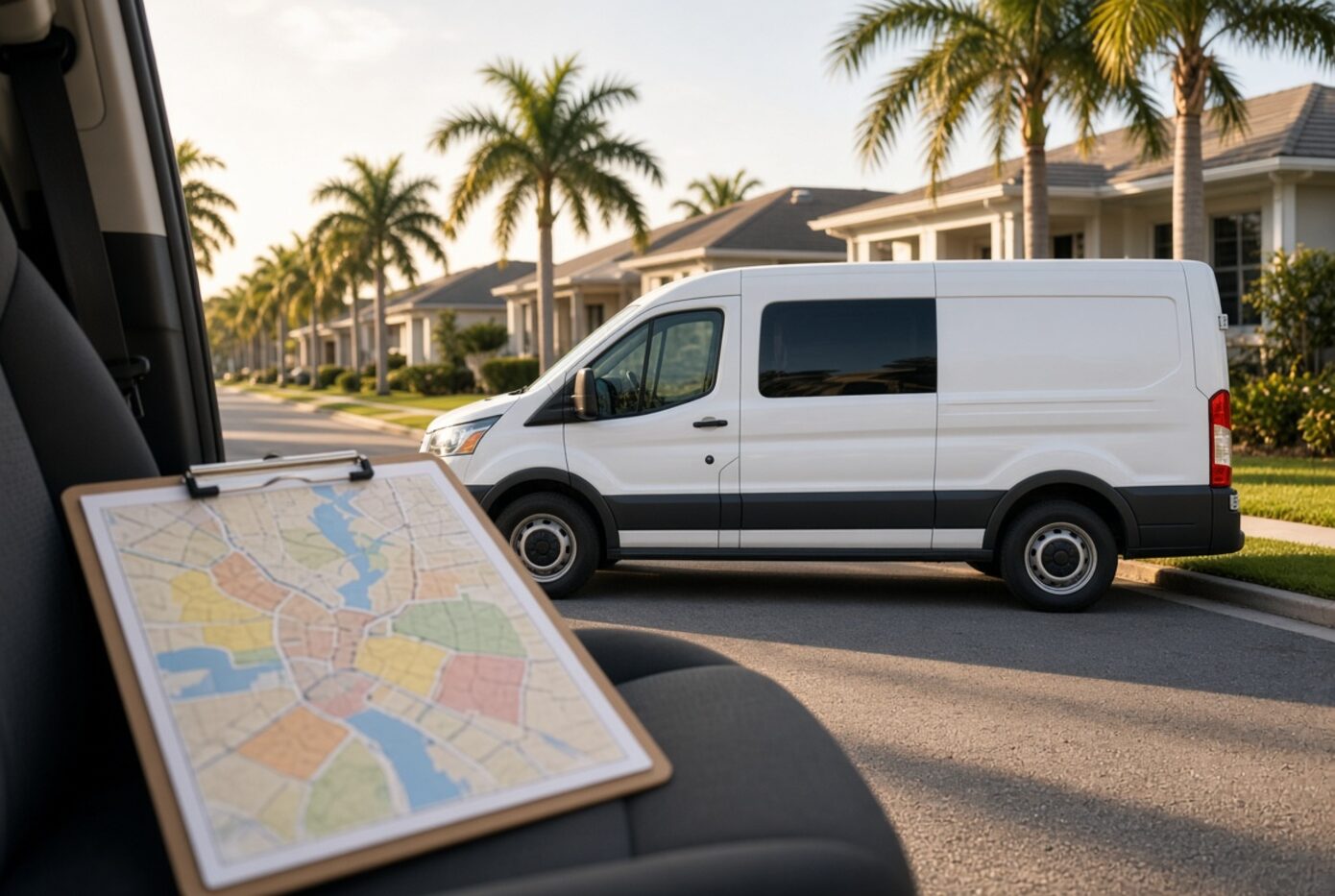
They drew four pockets on a printed map and taped it by the phone. The office stopped asking "when can we get you in" as the first question. The first question became "what city or neighborhood?" If the answer was Plant City and Thursday was already a west-county day, Thursday came off the table.
Within two weeks the same two crews averaged one extra finished stop on most days. Late texts dropped. The owner stopped leaving a job to reroute people from his truck. Nobody bought new software to get that result. They changed the rule that created the triangle.
Protect the plan when the phone keeps ringing
Zones die when the office treats every caller like an emergency. Most callers want a trustworthy window, not a hero visit in 90 minutes.
Give the person who answers the phone three options they can say out loud:
- A next window in that zone, with a real arrival range.
- A sooner window if the customer can take a leftover slot near a crew already in the area.
- A true emergency path that uses a reserved gap, not the middle of a planned route.
Write those options on a card. If the answer still depends on the owner guessing from a rooftop, the zone plan will last about four days.
Same-day add-ons can stay. They belong next to a crew that is already close. A "yes" that sends someone from Clearwater to Valrico at 2 p.m. is a no that you dressed up as hustle.
What to measure for two weeks
Do not wait for a perfect dashboard. Track four numbers on a notepad:
- Finished stops per crew per day.
- Minutes from last job to next job.
- Arrivals that missed the promised window.
- Jobs you accepted outside the day's zone, and why.
If finished stops rise and missed windows fall, the plan is working. If you keep breaking the zone "just this once," the notepad will show it. That is the point.
Watch the exceptions. Storm work, a builder's punch list, and a leaking water heater will break a tidy map. Plan a hold slot so those jobs have a home. The goal is fewer accidental zigzags, not a rigid grid that ignores real life.
A tighter map beats a busier calendar
Owners often try to fix this with more people. A third crew on a broken map just draws more triangles. Capacity grows when each truck spends more minutes on the property and fewer minutes on Gandy or the Selmon.
Customers feel the difference even if they never see your map. A crew that arrives inside the window, finishes the scope, and is not already late for Brandon does better work. That is the job they tell a neighbor about.
The system behind that is not complicated. It is a website and booking flow that captures the city first, a calendar that groups work by pocket, and a short list of rules the office can follow when you are on a roof. Clean that up and the same crew books more finished work without adding chaos to the morning.
Are the calls getting away from you?
I work with Tampa HVAC and plumbing companies that already run at least 3 trucks. Call or text me.